
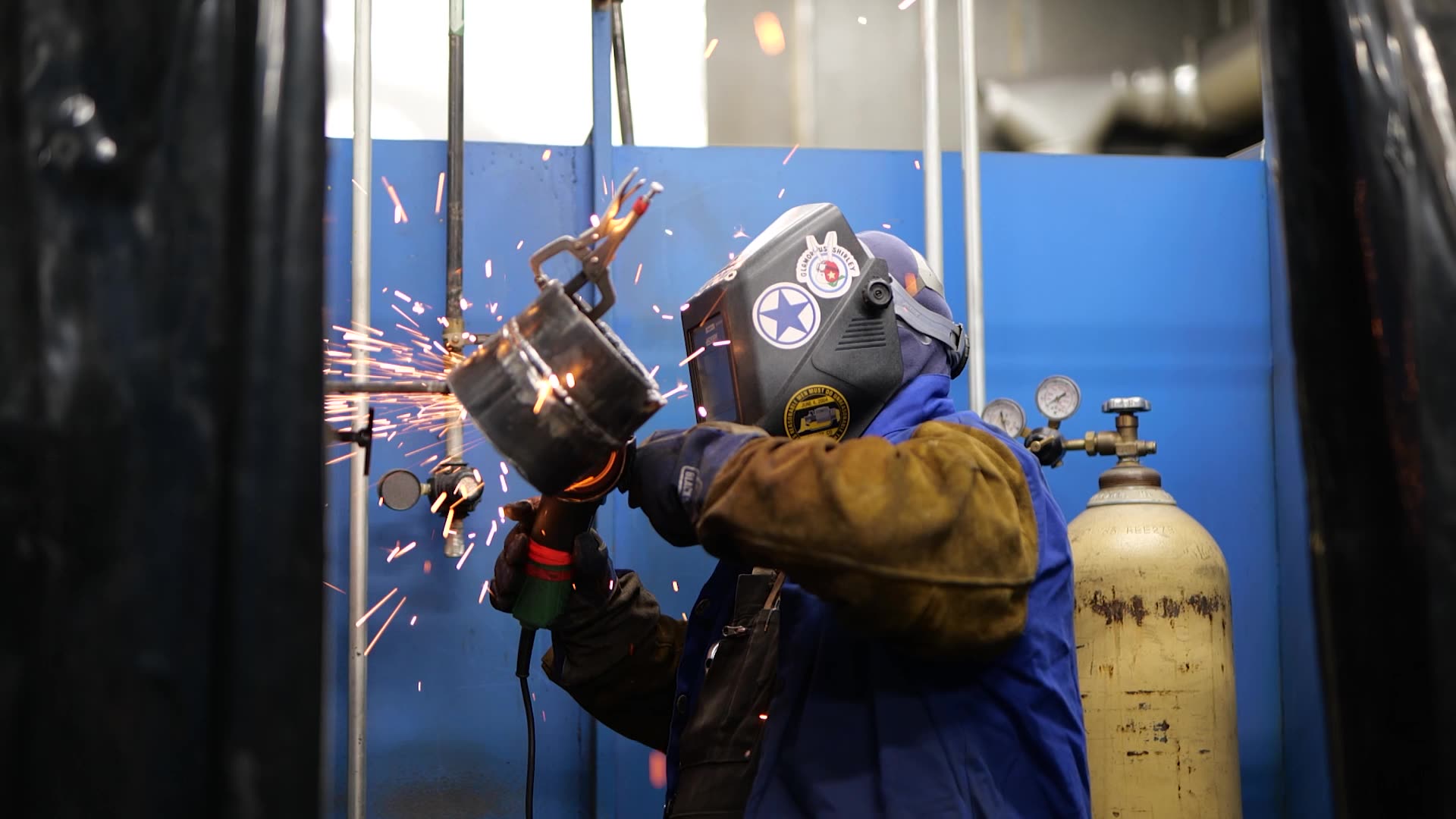
Walking into a welding shop for the first time can feel intimidating, especially for someone who has never welded before. At North American Trade Schools (NATS), the Combination Welding program starts with the basics and builds skills step by step.
Andy Eichler, the Director of Education Programs at NATS, has been a welder for 16 years. He also taught welding at NATS and later led the school’s welding program. Here is what he says new students can expect in the first few weeks.
What New Students Worry About Most
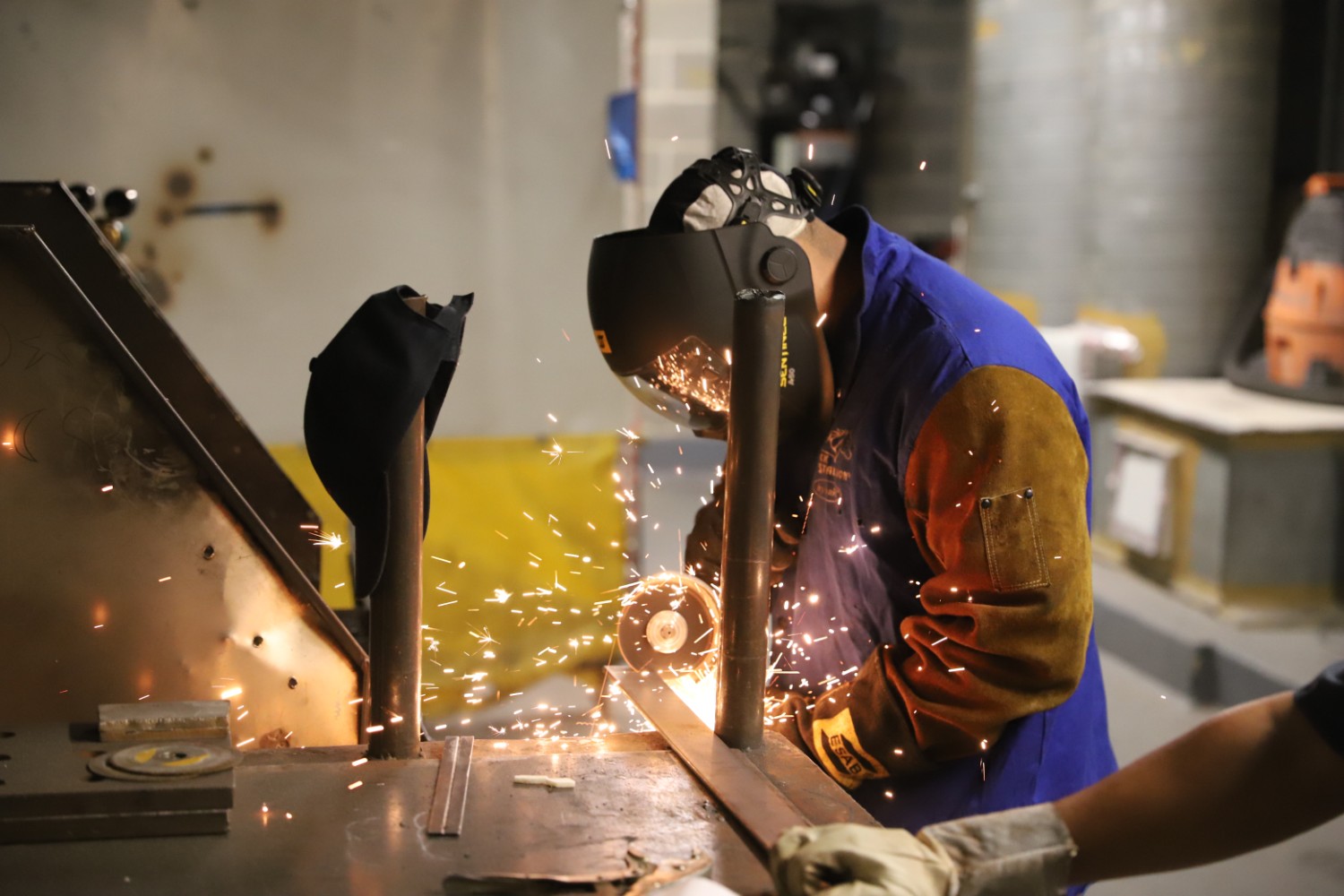
When asked what new students are most nervous about, Eichler’s answer was short: “Flying sparks.”
“If you’re not used to seeing sparks flying around, and you don’t realize that that equipment’s going to protect you, you’re going to be a little scared in the beginning,” he explained.
Every student gets protective gear from the start. “The program starts out with a starter kit that has your gloves, your safety glasses, your boots. It comes with all of that as part of the tuition.”
With the right gear and some time in the shop, that fear usually fades. “I have one student that was terrified his first couple weeks. Now he’s just walking around like it’s another day,” he added. “You’ve got to get to that point of comfortability, knowing that as long as you do things safely, you’re good.”
Week One Starts in the Classroom
The first five days are a probationary period. Students spend that time in the classroom, learning the basics, including metallurgy, which is the science of how metals behave.
Many new students expect something different. “Students in the first week don’t really expect a lot of that classroom time,” Eichler said. “They’re expecting, since we’re a trade school, that they’re going to immediately go into the lab.”
There is a reason for all that classroom time. “Welding is a lot more than just the physical application. There’s a lot of math behind it. There’s a lot of different scientific things behind it, such as different chemicals on the periodic table.”
Another part of the job catches students off guard. “Blueprint reading is also something that doesn’t get translated very well into what they think it’s going to be all about. A lot of the students watch it on YouTube, and they go, ‘Oh, that’s what I’m going to be doing all day.'”
The First Days in the Lab
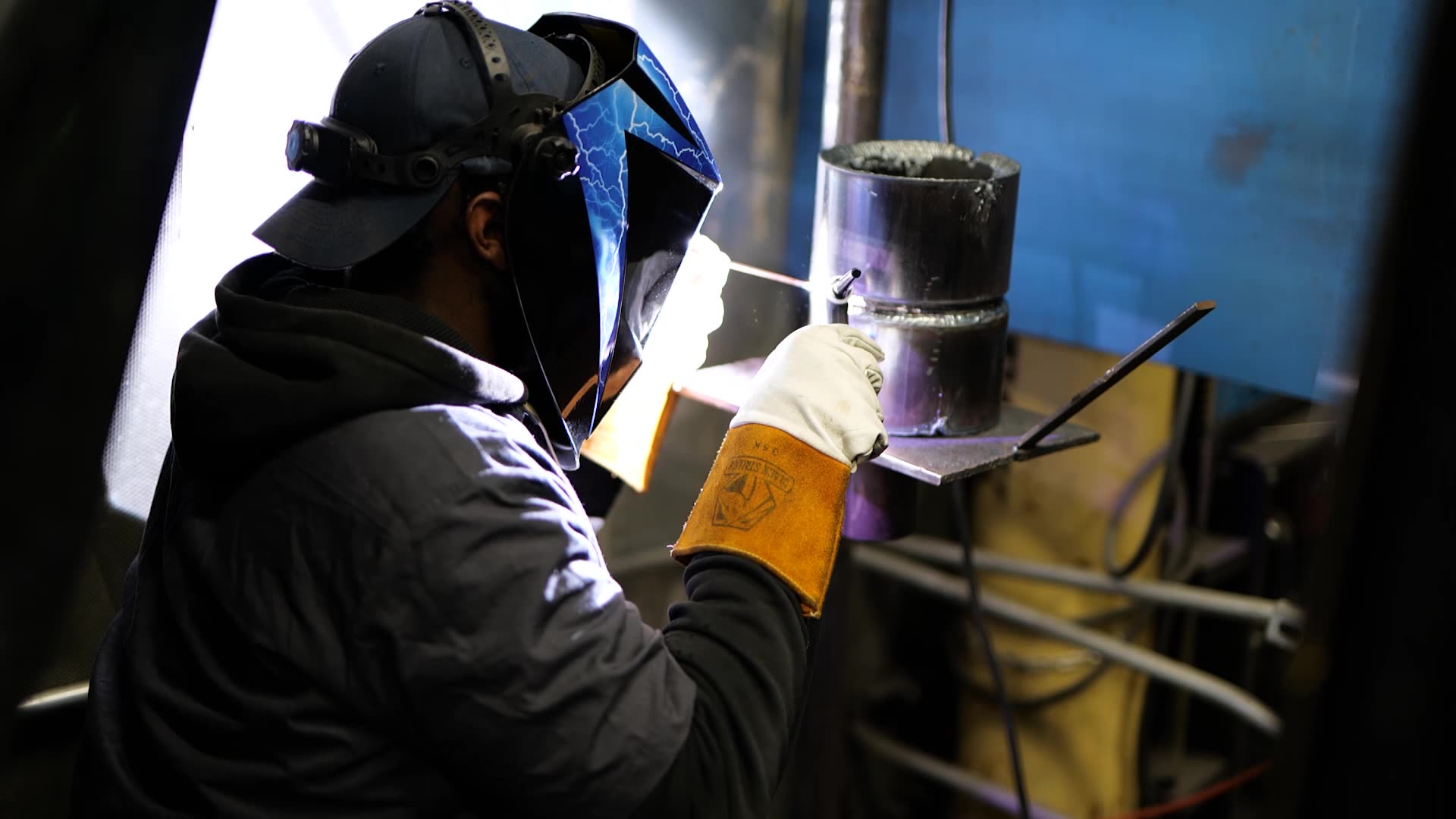
After a week of books and blueprint basics, the lab is where things start to fall into place. Once students complete the probationary period, they move into the lab and start putting their classroom lessons into practice.
“Most students start with what’s called stick welding,” said Eichler. They begin with a 6010 rod, a common type of welding electrode, on a flat piece of metal. The 6010 rod is easier for beginners to pick up because it runs at a lower amperage.
Those first lab days are about getting comfortable with the equipment. Students learn how the welding machine and rods work, and they also practice oxyacetylene cutting.
Striking the First Arc
Most students strike their first arc in the second week, and instructors guide them through it. “The instructor’s going around and walking between booths and helping students out to get that first arc strike,” Eichler said, “getting them used to setting the machine up, showing them little tips and tricks.” For a student who was nervous about sparks just a week earlier, that first arc is a big step.
What Comes Next
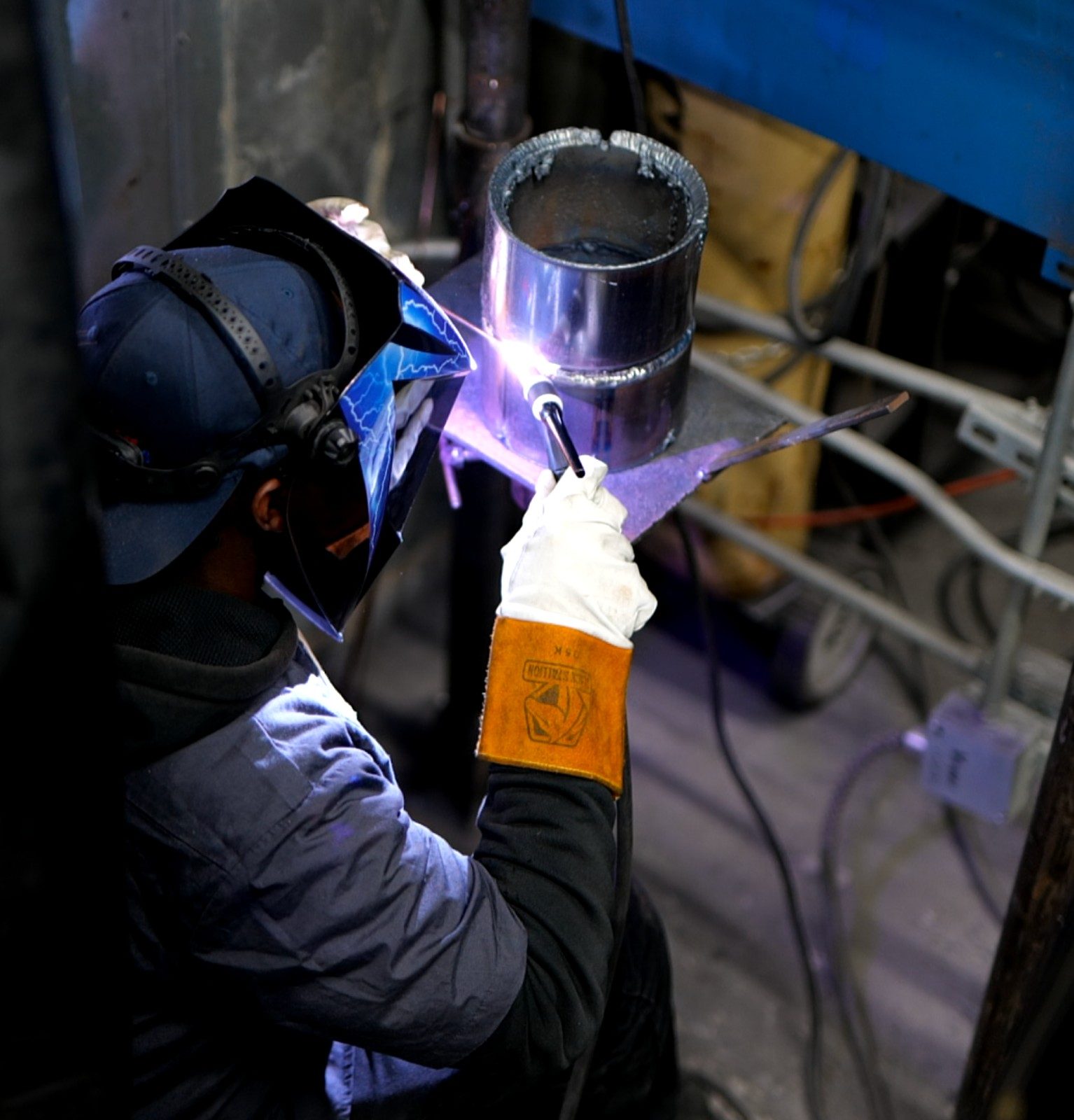
That first arc is only the start. From there, training builds to the three main welding processes: stick, MIG, and TIG. Students also learn flux-cored welding, an application of MIG welding, along with plasma arc cutting. They earn AWS D1.1 certification after passing the D1.1 test, and NATS covers the cost of a student’s first attempt at the American Welding Society certification. Learn more about why welding certification matters.
After graduation, the NATS job placement team helps graduates find open positions. Graduates can explore career paths in welding such as pipe welding, fitting, and construction welding.
Frequently Asked Questions
Do I need to be good at math to learn welding? No. Welders mostly use basic math, such as measurements, fractions, and simple geometry, and those skills are taught in the classroom.
Is welding physically demanding? Yes, it can be. Welders often stand for long periods, work in tight or awkward positions, and lift heavy materials.
How long is the Combination Welding program at NATS? Day classes take 36 weeks. Evening classes take 44 weeks.
Is financial aid available for welding students? Yes. The NATS financial aid office helps students review their options, including veterans education benefits.
What do I need to enroll in the welding program? Applicants need a high school diploma or GED and must pass an entrance test. The admissions team can walk through the full process.
Do I need welding experience to enroll? No. Welding experience is not required, and training starts with the basics in the classroom.
See the Welding Lab in Person
The best way to know if welding is the right fit is to see where the training happens. Call NATS at (410) 298-4844 or visit the Contact Us page to schedule a campus visit and talk with admissions.