
Baltimore is in the middle of a major building push. Billions of dollars are being committed to new construction across the city. For anyone considering a construction career in Baltimore, that means one thing: the demand for trained workers is growing, and the time to get in is now.
Baltimore’s population grew for the first time in ten years, according to the U.S. Census Bureau, and homicide rates hit a 50-year low through mid-2025. City and state officials are now moving to build on that progress.
Two major projects, detailed in a New York Times article, are driving that push:
- A $1 billion plan to rebuild Harborplace on the Inner Harbor waterfront, covering 20 acres with apartment towers, office space, an outdoor amphitheater, and 18 acres of public parkland. Construction begins in late 2026.
- A $7 billion downtown overhaul called Downtown RISE, adding housing, retail, office space, and street improvements across the city’s core. This multi-year initiative is expected to run through the early 2030s.
Together, these projects represent years of active construction across Baltimore’s most visible corridors. None of it gets built without skilled construction workers.
What These Projects Mean for Construction Workers
A project the size of Harborplace generates demand across the entire building technology trades. Workers are needed at every stage, from ground prep through final finishes. That includes:
- Site prep and concrete work
- Masonry and framing
- Drywall and exterior finishing
- Roofing and plumbing rough-in
- Finish carpentry and interior work
Downtown RISE extends the work over a longer timeframe. General contractors and subcontractors on projects this size typically start hiring trained workers before construction begins and keep hiring through each phase. For someone who completes a building construction training program in the next year, the hiring window will still be wide open. The $7 billion scope includes:
- New housing and residential buildings
- Retail and commercial build-outs
- Office buildings and street-level improvements
Construction Worker Shortage Creates Openings
The construction industry has been short on workers for years and is not catching up. The Associated General Contractors of America’s 2025 Workforce Survey found that 92 percent of firms that are hiring say they have a hard time finding qualified workers. Forty-five percent say the shortage has already delayed at least one project. Worker shortages are now the top cause of construction delays in the country. For someone entering the field with solid training and credentials, that shortage works in their favor.
The same survey found that more than half of available candidates lack the skills, licenses, or safety certifications needed to do the job. Contractors are not just short on people. They are short on people who are ready to work from day one. Workers who come in with hands-on training and an OSHA certification are:
- Easier to hire, because they meet the baseline requirements contractors need
- Easier to place on job sites, because they already hold required safety credentials
- More likely to move up quickly, because they stand out in a pool where qualified candidates are scarce
What Does Construction Work Pay in Maryland?
Construction pays well for work that does not require a college degree. Here is what the data shows:
- The median annual wage for construction workers nationally was $58,360 in May 2024, compared to $49,500 for all jobs
- The average construction wage hit $39.33 per hour in 2025, and construction workers take home about 24 percent more per week than the average private-sector worker
Construction jobs are also projected to grow faster than most other fields through 2034, with roughly 649,300 openings expected each year nationwide. Getting in does not require a four-year degree. People in the Baltimore area looking for stable, well-paying work with room to advance will find construction among the strongest options available right now.
What a Building Technology Training Program Covers
Building technology programs cover the core trades involved in putting up and finishing structures. These are the skills contractors actively hire for on large job sites like the ones Baltimore is now building. A typical program includes:
- Blueprint reading and estimating
- Framing, rough carpentry, and masonry
- Drywall, exterior siding, and roofing
- Plumbing basics and door and window installation
- Finish carpentry and cabinetry
Most programs run about nine months. Students who complete the program are eligible to earn an OSHA 10 Safety certification and a Ramset Powder Actuated Tool (PAT) license, both of which are standard requirements on commercial job sites.
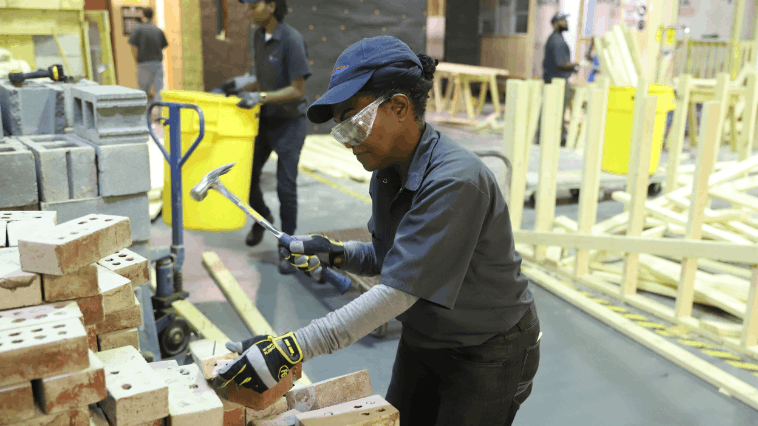
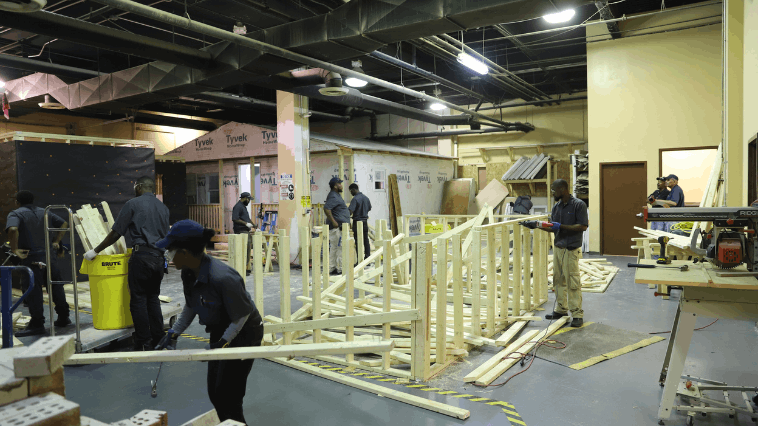
Training starts in the classroom, where students work through the concepts and construction math behind the trades. It then moves into a shop setting where students build real mock-ups of walls, floors, doors, windows, and bathroom spaces. That hands-on work is where classroom learning turns into job-ready skills.
For people already living in Baltimore, training locally has a real edge. Contractors working on Baltimore projects tend to hire locally. Workers who are trained in the city and have ties to local employers are better positioned than those coming in from outside. The time to build those connections is now, before the biggest phases of construction begin.
Start Building Technology Training in Baltimore
North American Trade Schools (NATS) has been training skilled trade workers in Baltimore for more than 50 years. The Building Construction Technology program prepares students for entry-level jobs in construction, carpentry, roofing, and related fields.
Learn more about our Building Technology program or call (410) 298-4844 to learn more. The admissions team can walk through program details and available funding.
FAQs
How long does it take to get a construction job?
A building technology training program takes about nine months to complete. That is significantly shorter than a two- or four-year degree, and graduates come out with hands-on skills and industry-recognized credentials that qualify them for entry-level work on day one. For someone in Baltimore who wants to be working in construction before the biggest phases of the Harborplace project begin, a nine-month timeline is realistic.
Do you need experience to start a building technology program?
No prior construction experience is required to enroll in a building technology program. Programs are designed for people entering the trades for the first time. Training starts with foundational classroom instruction, including blueprint reading, construction math, and core concepts, before moving into hands-on lab work. That structure is built to take someone with no background and get them job-ready.
What jobs can you get after completing a building technology program?
Graduates are prepared for entry-level positions across the construction trades, including framing carpenter, drywall installer, masonry worker, roofer, and general construction laborer. With an OSHA 10 Safety certification and a Ramset PAT license earned through the program, graduates meet the baseline credentialing requirements that most commercial job sites require. From those starting positions, experienced workers can move into lead roles, supervisory positions, and specialized trades.
Does NATS help graduates find jobs?
Yes. North American Trade Schools has a career services team that helps graduates with resume writing, job leads, and employer connections in the Baltimore area. NATS has been operating in Baltimore since 1971, which means the school has long-standing relationships with local contractors and employers who hire in the construction trades. For someone without an existing network in the industry, that support is a meaningful practical advantage.
Is financial aid available for building technology programs?
Yes, financial aid is available for students who qualify. The NATS admissions team can walk prospective students through what funding options apply to their situation.