
Choosing a Training Program
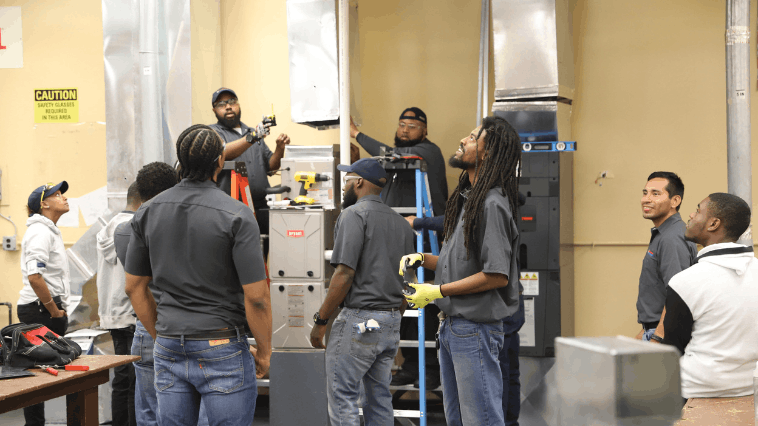
The first months of HVAC training lay the foundation for skills and habits that can make or break your career. Selecting the best program to prepare you for licensure, mastering EPA Section 608 certification, and understanding real HVAC job requirements carries critical information that even the most successful technicians wish someone had shared with them earlier.
Choosing a reputable HVAC school is often the difference between struggling to find work and launching a rewarding career. Before enrolling, seek an accredited school with knowledgeable faculty with real-world experience.
Skills You’ll Learn in HVAC Training
Beyond classroom training, HVAC technicians must master several technical skills that separate in-demand HVAC professionals from average workers. These abilities often lead to longer, better-paying careers.
These are some of the core skills an HVAC technician will need to master:
- Reading blueprints and technical diagrams
- Electrical systems
- Refrigeration cycles
- Diagnostic tools
- Maryland HVAC standards and codes
Know how to read blueprints and technical diagrams
Blueprint literacy is one of the most valuable and underappreciated HVAC skills. These technical documents are the universal language of construction, connecting design engineers with field technicians. Skilled technicians learn to interpret symbols, legends, and scales to visualize components such as vents, ducts, and thermostats.
Every set of HVAC drawings has equipment locations, ductwork paths, component placements, and piping schematics. Misreading blueprints can lead to incorrect installations that require costly corrections later.
Learn electrical systems
HVAC technicians must be skilled in working with electrical systems. Since almost all heating and cooling systems rely on electricity, technicians must have fundamental concepts of:
- Circuits
- Voltage
- Wiring
- Electrical codes
This knowledge is vital to troubleshooting malfunctioning systems. Many problems come from electrical components rather than mechanical issues.
Technicians should develop the skills to read wiring diagrams and use multimeters to identify faults without guesswork. This expertise extends beyond basic repairs: technicians often encounter electrical wiring during installations, such as ductwork placement, so a solid foundation in wiring and electrical systems is a must.
Understand refrigeration cycles
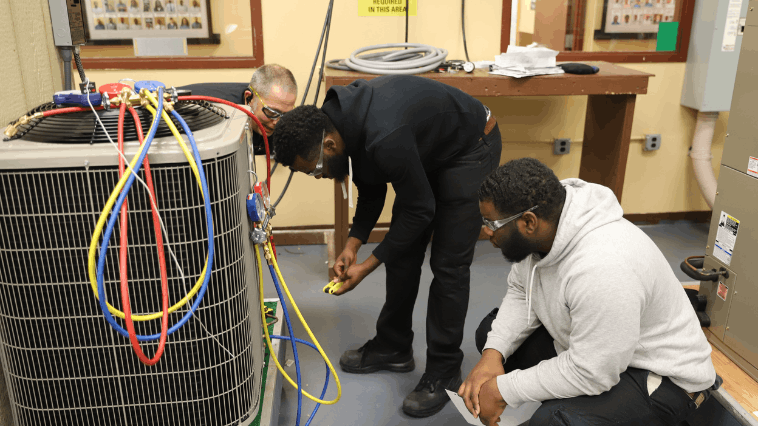
Refrigeration cycles are key in diagnosing and maintaining heating and cooling systems. A continuous, closed-loop system, the cycle works when the compressor, condenser coil, metering device, and evaporator coil work together to cool.
Understanding refrigeration cycles helps technicians pinpoint exactly where systems fail. Identifying where an interrupted refrigeration cycle is breaking down is key to repairing it.
Use diagnostic tools effectively
Modern HVAC work depends on sophisticated diagnostic tools that transform how technicians identify and resolve issues. Digital instruments like combustion analyzers, draft gauges, and manometers provide precise measurements that reveal problems invisible to the naked eye.
Smart diagnostic apps now connect with Bluetooth-enabled tools to improve installation quality and fault detection. These advanced tools have shown significant benefits, including increased maintenance agreements, higher revenue, and faster onboarding for new technicians.
Mastering these diagnostic tools allows technicians to make decisions based on data and facts rather than relying on guesswork or intuition.
Get (and stay) compliant with Maryland codes
Staying compliant with local regulations is essential to protect both technicians and clients. Maryland has specific HVAC standards that technicians must follow, including handling refrigerants in accordance with EPA guidelines. These regulations cover everything from installation methods to energy-efficiency requirements and serve as the backbone of safety protocols for HVAC technicians.
Technicians certified in EPA Section 608 refrigerant handling demonstrate a commitment to environmental safety and legal compliance. Staying up to date on Maryland environmental codes becomes increasingly crucial as the state focuses on reducing emissions through efficient HVAC systems.
Common misconceptions about HVAC careers
Several myths about the HVAC industry may discourage potential HVAC students:
- HVAC is just about air conditioning – In reality, technicians work on heating systems, ventilation, refrigeration, indoor air quality controls, and even programmable systems.
- Limited job growth – The HVAC industry in Maryland projects a 10% growth through 2032. This rate exceeds that of many other occupations.
- It’s only for men – Although it’s historically male-dominated, the percentage of women in HVAC has more than doubled in recent years, opening opportunities for diverse candidates.
Conclusion
Becoming an HVAC technician represents a wise investment in your professional future. Proper training and certification create a clear path to financial stability and career advancement, particularly in Baltimore, where the need for skilled HVAC techs remains high.
Before choosing any program, speak with working professionals about their experiences. Their insights might save you significant time and money. After all, successful HVAC careers aren’t built on theoretical knowledge alone but on practical skills developed through quality training and real-world experience.
North American Trade Schools can help you start an HVAC career. The HRVAC program can get you on the road to a career in as little as 39 weeks.
FAQs
What certifications and licenses does the state of Maryland require for an HVAC technician?
You must have a Maryland HVAC license and EPA Section 608 certification to legally handle refrigerants. These certifications ensure you meet state and federal requirements.
How Long Does HVAC Training Take?
Most HVAC certification programs last between 12 to 18 months, allowing new technicians to start working sooner than with traditional four-year degrees. Several trade schools offer HVAC training programs.
Can I work while attending HVAC training?
Yes. Many apprenticeships pay you while you train under a licensed contractor. Flexible options and evening class schedules also help you keep your current job during training.
Are online HVAC training programs effective?
Online programs can offer flexible learning and simulations, but hands-on experience with real equipment is crucial for job readiness. Combining online theory with in-person labs is ideal for people pursuing online education.