
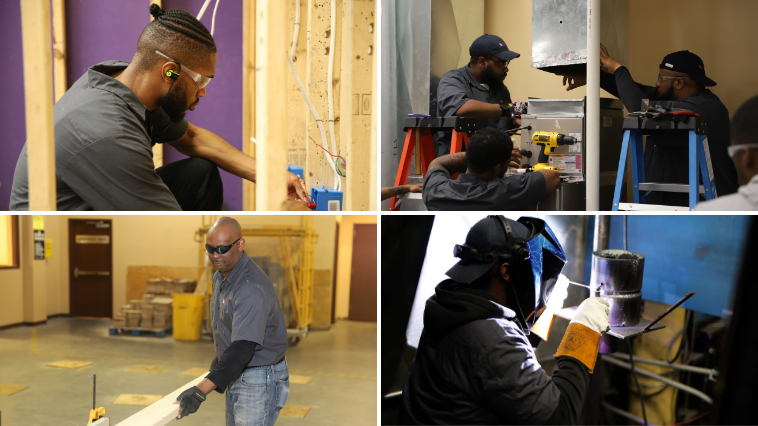
A four-year degree is not the only path to a strong paycheck in Maryland. Many skilled trades here pay more than the national median, and some top $70,000 a year. Here’s a closer look at what each trade pays, what the work is really like, and how to start training, which can take less than a year
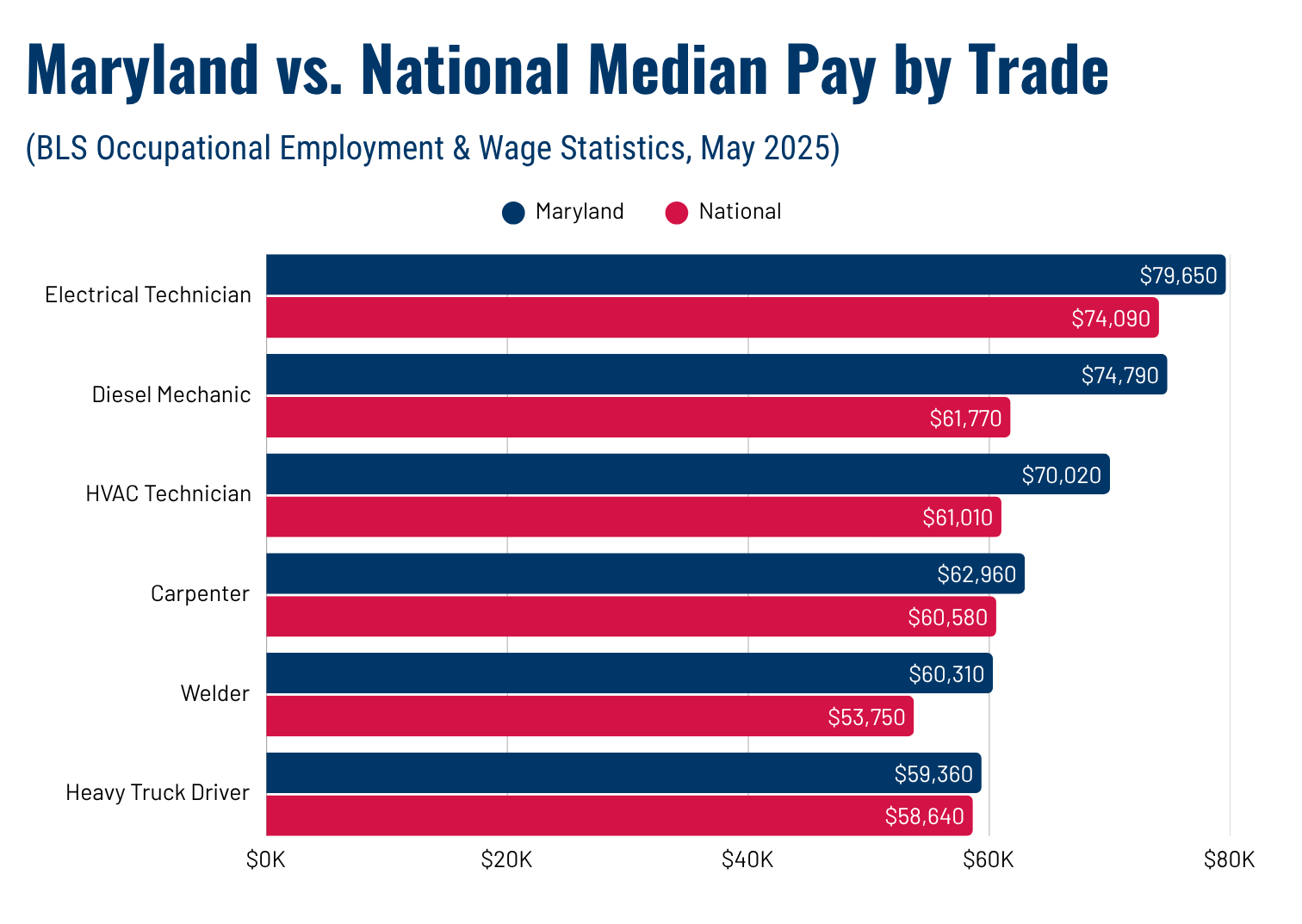
Source: BLS Occupational Employment and Wage Statistics, May 2025, as shown on O*NET OnLine and CareerOneStop. Both sites are run by the U.S. Department of Labor. Median pay includes workers at every experience level, so entry-level pay is usually lower.
Key Takeaways
- Every trade covered here pays better in Maryland than it does nationally. Electrical technicians earn the most, at a $79,650 median. Diesel mechanics ($74,790) and HVAC technicians ($70,020) come next.
- Diesel mechanics see the biggest pay boost in Maryland, earning about $13,000 more per year than the national median.
- The Port of Baltimore, new data centers in Frederick County, and Baltimore’s construction boom keep demand for trade workers strong.
- HVAC jobs are growing fast, and BLS expects an 11 percent rise by 2035, well above the average for all jobs.
- Most North American Trade Schools (NATS) programs take about a year or less.
Why Do Trades Pay More in Maryland?
Maryland is a higher-paying U.S. state, ranking in the top 10 for average weekly wages in early 2026, according to BLS. Some of the biggest paychecks show up in Montgomery County, Howard County, and Baltimore City. When wages run high across the state, trade pay tends to rise with them.
Local industry also creates steady work. The Port of Baltimore supports about 20,300 direct jobs and more than 273,000 jobs tied to the port, according to the Maryland Port Administration. New data center projects in Frederick County and Baltimore’s construction boom add even more demand.
Electrical Technicians: The Problem-Solvers Behind the Controls
When a factory’s control system or a business’s transmitter stops working, the work can stop with it. Electrical technicians get it running again. They repair, test, adjust, and install electronic gear, such as industrial controls, transmitters, and antennas. The job is part detective work and part hands-on repair. It is a strong fit for people who like solving puzzles.
That skill pays well. Maryland electrical technicians earn a median of $79,650 per year, about $5,500 more than the national median, according to BLS data. Employers value this skill because every hour a machine sits broken can cost a company money.
Students in the NATS Electrical Technology program practice on wiring boards, motor controls (PLC), and electronics in the lab. The same training can also be a first step toward becoming a licensed electrician in Maryland.
Diesel Mechanics: The Power Behind Maryland’s Heavy Equipment
Diesel engines power far more than just trucks. They run buses, construction equipment, generators, and boats, and every one of them needs regular service. Diesel mechanics find engine problems, fix brakes and fuel systems, and keep that equipment working. At the Port of Baltimore alone, diesel trucks and other heavy equipment move cargo every day.
Demand shows up in the paycheck. Maryland diesel mechanics earn a median of $74,790 per year, according to CareerOneStop. That is about $13,000 more than the national median, the biggest gap of any trade covered in this guide.
NATS gives students two ways into this field. The Diesel Technology program focuses on repair. The Diesel Technology with CDL program adds training for a commercial driver’s license. It is a good fit for students who want to both fix and drive big trucks.
HVAC Technicians: Steady Work in Every Season
Maryland summers are hot and humid, and winters get cold. That means HVAC technicians stay busy all year, installing and repairing heating, cooling, and refrigeration systems in homes, offices, and stores. Each day can bring a new building and a new problem to solve.
Maryland HVAC technicians earn a median of $70,020 per year, about $9,000 more than the national median, according to BLS data. More of these jobs are on the way, with 11 percent growth expected by 2035.
At NATS, HRVAC training mixes classroom lessons with hands-on lab work. Students in the HRVAC Technology program learn to find problems in, repair, and install heating and cooling systems. They also practice ductwork, metalwork, and HVAC electrical work. Graduates leave with their EPA 608 certificate.
Carpenters: Building Maryland from the Ground Up
Every new house, office, and apartment building starts with a frame, and carpenters build it. They also put in stairs, walls, and window and door frames, often working from blueprints. Years later, they can drive past a home or building and know they helped put it up.
Baltimore’s construction boom keeps that work coming. Maryland carpenters earn a median of $62,960 per year, according to BLS data.
Carpentry training can also lead to more than one job. The NATS Building Construction Technology program covers framing, rough and finish carpentry, and masonry. Graduates can work as carpenters, masons, or construction laborers, depending on the type of work they enjoy most.
Welders: Joining the Steel Behind Baltimore’s Biggest Projects
Ships, bridges, and steel buildings all depend on strong welds. In Baltimore, welders work at the Port, at the Tradepoint Atlantic site in Sparrows Point, and on the Francis Scott Key Bridge rebuild.
Maryland welders earn a median of $60,310 per year, according to BLS data. Pay can climb higher with certification and specialty work like pipe or marine welding, which helps make welding a good career in Baltimore.
Knowing more than one welding method helps. The NATS Combination Welding program teaches stick, MIG, TIG, and flux-core welding. Students also prepare for AWS and ASME certifications, the credentials that can lead to those higher-paying roles.
Truck Drivers: The Fastest Route into a Trade
Truck drivers move the goods that stock Maryland’s stores, warehouses, and job sites. Along with driving, they inspect their trucks before each trip, secure their loads, and keep records of their hours on the road. Maryland heavy truck drivers earn a median of $59,360 per year, according to BLS data.
The type of license a driver holds shapes the job. A Class A CDL covers tractor-trailers on over-the-road, regional, and local routes. A Class B CDL can lead to jobs driving dump trucks, delivery trucks, and, with extra endorsements, school buses. These jobs often stay on local routes. Either way, drivers can get on the road quickly. At NATS, Class B training takes just 48 hours, and Class A training takes about anywhere from 10 to 20 weeks. That makes truck driving the fastest path into a trade of any job covered here.
How Long Does Trade School Take in Maryland?
Most trade school programs take six months to two years. At NATS, most programs take about a year or less. A bachelor’s degree, by comparison, takes four or more years.
| Trade | NATS Program | Program Length | Certifications |
| Electrical Technician | Electrical Technology | 39 weeks (day) or 58 weeks (evening) | NCCER Core, Electrical Level 1, OSHA 10 |
| Diesel Mechanic | Diesel Technology | 39 weeks (daytime classes) or 58 weeks (evening classes) | See program page |
| Diesel Mechanic with CDL | Diesel Technology with CDL | 39 weeks or 58 weeks plus 1,440 hours for CDL | See program page |
| HVAC Technician | HRVAC Technology | 39 weeks (day) or 58 weeks (evening) | EPA 608 Certificate |
| Carpenter | Building Construction Technology | 39 weeks | OSHA 10 Safety Certificate |
| Welder | Combination Welding | 36 weeks (day) or 44 weeks (evening) | AWS and ASME prep |
| Heavy Truck Driver | Commercial Truck Driving | 10, 17, or 20 weeks (Class A), 48 hours (Class B) | Class A or Class B CDL |
Training for Maryland Trades at NATS
NATS has trained tradespeople and truck drivers in Baltimore since 1971. The school is accredited by the Accrediting Commission of Career Schools and Colleges (ACCSC). It is also approved by the Maryland Higher Education Commission. The Career Services team helps graduates find local jobs and get ready for interviews.
To compare programs, visit the NATS program pages or request more information.
FAQs
Is an electrical technician the same as an electrician?
No. Electricians put in and fix the wiring in buildings, while electrical technicians repair, test, and install electronic equipment like industrial controls, transmitters, and antennas.
How much do new trade workers earn in Maryland?
Usually less than the median. For example, the lowest-paid 10 percent of Maryland HVAC technicians earn $46,180 or less, which is closer to typical starting pay.
How much do Maryland trade workers earn per hour?
Median hourly pay for the trades in this guide ranges from about $28.54 for heavy truck drivers to $38.29 for electrical technicians, based on BLS data.
Do trade workers in Baltimore earn more than the national median?
Yes, in many trades. For example, Baltimore-area welders earn a $61,920 median, compared to $53,750 nationally.
Does trade pay vary across Maryland?
Yes. Pay tends to be highest in the Washington, D.C. suburbs, such as Montgomery and Prince George’s counties, where HVAC technicians earn a $71,920 median.