
Yes, welding is a strong career choice in Baltimore right now. Ships need repairs at the port, new steel goes up at Tradepoint Atlantic, and roads and bridges keep getting rebuilt across the city. All that work needs welders, and Baltimore doesn’t have enough of them. Local welder pay already beats the national average, which makes Baltimore a good place to build a welding career.
Key Takeaways
- Baltimore has more open welding jobs than workers to fill them, driven by port activity, industrial redevelopment, and infrastructure work.
- Baltimore-area welders average about $29.50 an hour, above the $25.84 national median, with top earners making $40.88 an hour or more.
- Specialty and certified welding roles can pay up to $60 an hour, according to local job postings.
- No four-year degree is required. A welding trade school program, like North American Trade Schools’ Combination Welding program, can prepare graduates for entry-level jobs and certification exams.
- Long-term pay growth depends on certification and skill. Welding supervisors earn $70,000 to $90,000 or more a year, according to the American Welding Society.
Why Baltimore’s Job Market Favors Welders
The American Welding Society says the U.S. will need about 320,500 new welders by 2029. That means about 80,000 open welding jobs each year from 2025 to 2029.
– American Welding Society
The U.S. Bureau of Labor Statistics expects about 40,300 welding job openings each year across the country. Most of these openings appear as experienced welders retire, which opens the door for new workers. Baltimore’s need runs even higher. The city has a heavy mix of marine, energy, and building work that few other U.S. cities can match.
Key Industries Hiring Welders in Baltimore
Several major industries drive the demand for welding jobs in Baltimore.
- Port of Baltimore and marine work: Shipyard welders here repair ship hulls, build new ship parts, and fix piers and cranes. They mainly use two methods: flux-cored arc welding, or FCAW, and shielded metal arc welding, or SMAW. Both methods work well on the thick steel used in this kind of work.
- Tradepoint Atlantic: This site sits on the old Bethlehem Steel plant at Sparrows Point. It’s now home to a big rebuild, including a new shipping terminal that broke ground in 2026. Work like this needs welders to build structural steel for new warehouses and the terminal’s dock structures.
- Hospitals and construction: The region is spending billions of dollars on new projects. One example is the Francis Scott Key Bridge rebuild, a $5.2 billion project and Maryland’s first cable-stayed bridge. These projects need welders for building frames and pipe systems.
- State roads and bridges: The Maryland Transportation Authority hires welders too. It maintains eight toll sites: two turnpikes, two tunnels, and four bridges. These sites need steady welding repairs to stay safe.
What Do Welders Earn in Baltimore?
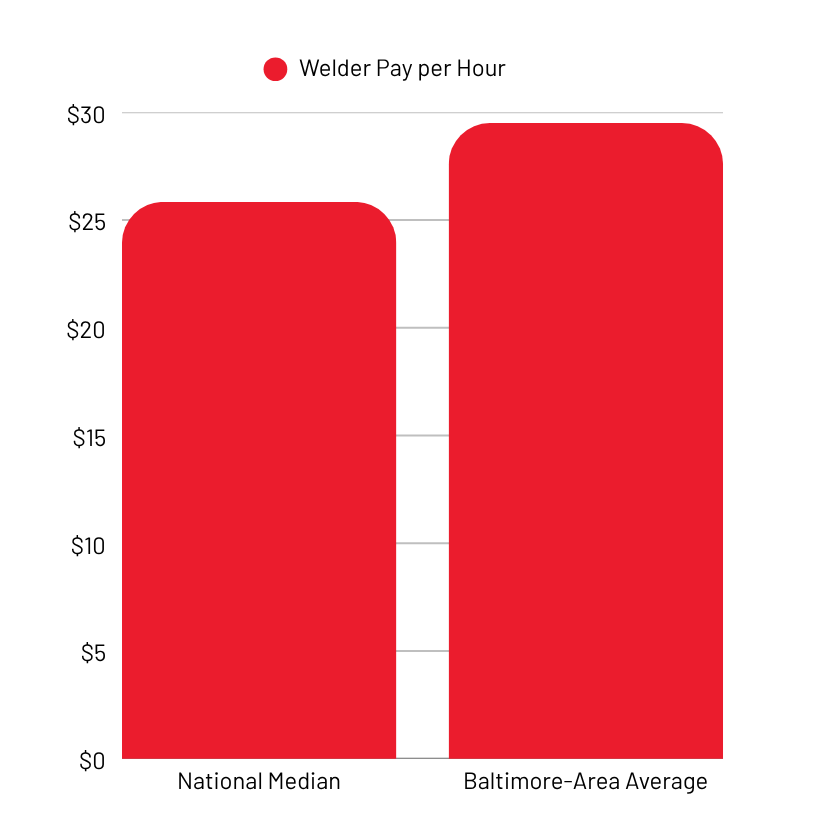
Welder salary figures in Baltimore tend to run above the U.S. average. The national median wage for welders was $25.84 an hour in May 2025, according to the BLS. The same data puts the Baltimore-area average at about $29.50 an hour. Pay ranges from about $20.68 an hour for entry-level roles up to $40.88 an hour or more for top earners.
Highest-Paying Welding Niches
| Niche | Hourly Range |
| Marine/structural welding | $35–$45 |
| Pipe welding | $30–$44 |
| Specialty/certified roles | $33–$60 |
Indeed’s job postings break this down further. General welders in Baltimore average $29.83 an hour. Certified welders average $33.08 an hour. AWS or ASME certifications are one of the biggest factors in pay. Welders who earn them early tend to see the fastest wage growth. Moving into marine, pipe, or other special work can push pay even higher, into the ranges shown above.
What Types of Welding Jobs Are Available in Baltimore?
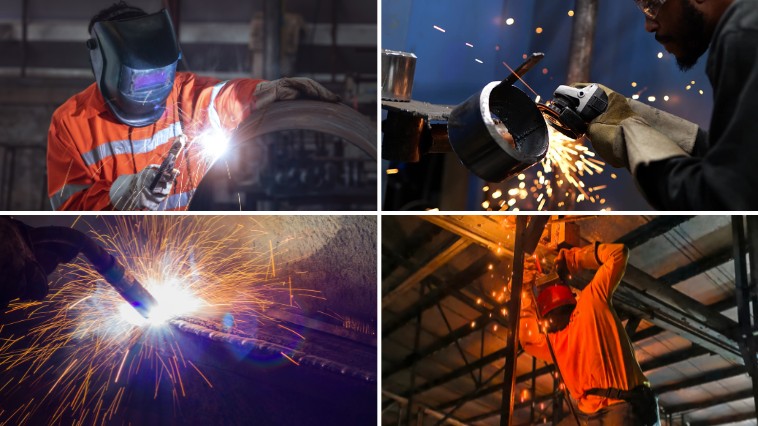
Baltimore’s mix of industries creates several kinds of welding jobs.
Combination Welding
Combination welding means a welder works in more than one process instead of specializing in just one. These processes include SMAW, GMAW, GTAW, and FCAW. Baltimore employers value combination welders because local projects often shift between different types of work. A shipyard job one week might turn into a pipe repair the next. A welder who can move between tasks fits more roles and stays in demand no matter which industry is hiring. This flexibility often leads to steadier work and higher pay over time.
Pipe Welding
Indeed lists dozens of pipe welder jobs in the Baltimore area at any time. These roles often involve water treatment plants, industrial sites, and mechanical systems inside large buildings. Pipe welders usually have to pass a specific pipe test. Welding a full pipe joint is harder than welding a flat seam. Passing that test is a valuable credential that many local employers look for.
Structural Welding
Structural welders build steel frames for bridges, warehouses, and other large projects around the region. This includes rebuilding work at sites like Tradepoint Atlantic and repair work on the Port of Baltimore’s docks and piers. Structural welding jobs often involve outdoor work, heights, and large crews. These projects can take months or years to finish.
Marine Welding
Marine welders build, repair, and overhaul ships and cutters. This work is central to the Coast Guard Yard in Curtis Bay, about six miles from downtown Baltimore. It’s the Coast Guard’s only shipbuilding and repair facility. It hires welders who are certified through the American Bureau of Shipping (ABS) and AWS. The Yard has repaired and built Coast Guard ships since 1899. It employs several hundred workers today, making it one of the most stable marine employers in the region.
How to Become a Welder in Baltimore
Becoming a welder in Baltimore usually follows a few clear steps. First, a person completes a trade school program that teaches core welding methods and safety practices. Next, they test for certification, such as AWS D1.1 or ASME Section IX, to prove those skills to employers. From there, most welders take an entry-level job or a paid apprentice role to build hands-on experience. A four-year degree isn’t required, but welding, like other trades, has its own tests and union rules.
The NATS Combination Welding program is one path in Baltimore that covers this training from the start. Day classes take 36 weeks, while evening classes take 44 weeks. Students learn SMAW, GMAW, GTAW, and FCAW, along with pipe and steel welding. Graduates can test for AWS D1.1 and ASME Section IX (Boiler Code) certification. They can also earn an OSHA 10 card. NATS pays for a student’s first certification test. NATS has trained tradespeople since 1971 and is approved by ACCSC.
Career Growth and Long-Term Outlook
Entry-level welding jobs are easy to find in Baltimore, but long-term pay growth depends on tests and skill. Many welders move up over time, going from welder to foreperson and eventually supervisor or welding inspector. The American Welding Society says welding supervisors earn $70,000 to $90,000 or more a year.
Two trends point to strong demand ahead. The government is spending more on roads and bridges, and many experienced welders are retiring. That means more open welding jobs in Baltimore for new workers in the years ahead. NATS also offers job placement support to help graduates connect with local employers. Anyone thinking about a trade career in Baltimore can weigh local demand and welder salary against the national numbers before deciding.
Request info about the NATS Combination Welding program or call 410-298-4844 to set up a visit.
FAQs
Is welding physically demanding work?
Yes. Welding involves standing, bending, and lifting for long stretches, often in tight spaces or hot conditions. Most welders build up stamina over time, and proper gear helps protect against burns and eye damage.
Do I need a high school diploma to enroll in the Combination Welding program?
Yes. NATS requires a high school diploma or GED to enroll in the Combination Welding program. This is standard across most trade schools.
Can I work while attending trade school classes?
Yes. The NATS Combination Welding program offers day and evening classes. This lets students work during the day and go to class at night.
Do Baltimore welders need to join a union?
No. Welders don’t have to join a union to work in Baltimore. But union jobs often pay more and tend to have better benefits.
Do I need to go to trade school for welding, or can I teach myself?
Going to trade school is the standard path in Baltimore. Welding is dangerous work, and employers won’t hire someone without formal training and certification. A trade school program teaches the safety practices and hands-on skills welders need before they ever step onto a job site.